
Why Booking Early Matters More Than Ever in Award Travel
Not long ago, award travel followed a familiar rhythm. You searched early, found a saver seat, transferred points, and booked. If you missed that first opportunity, you often had another chance later. Airlines regularly released unsold premium seats close to departure, and patience frequently paid off.
That rhythm has changed.
Airlines and hotels now operate in a world of dynamic pricing, quiet devaluations, increasingly sophisticated inventory management, and significantly higher demand for premium travel experiences. The travelers who consistently extract strong value today are not relying on luck or timing tricks. They are planning earlier, protecting flexibility, and monitoring bookings as conditions change.
At Astute Travel Advisors, we begin planning major international trips at least 18 months before departure. That does not mean we always book immediately, but it gives us time to monitor opportunities, earn additional points if needed, and act quickly when the right award space appears.
The earlier you begin planning, the more options you typically have available.
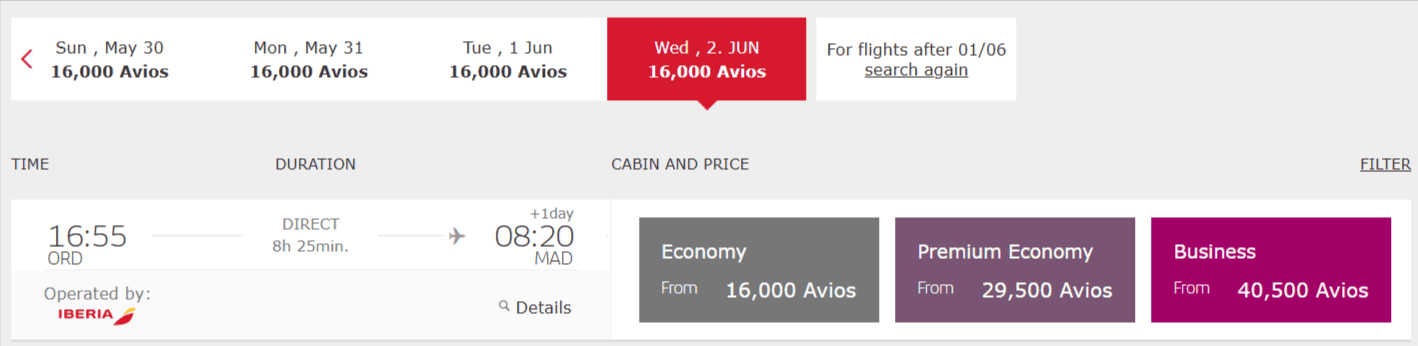
Award availability and pricing shown are examples only and may vary by route, date, and demand.
Article Index
- Award Travel Has Become More Competitive
- Why Booking Early Can Create an Advantage
- Our Strategy: Secure the Long-Haul Flight First
- Understanding Intercontinental Business Class
- Why We Start Planning Europe Trips 18 Months Ahead
- Create Loyalty Accounts Before You Need Them
- Award Search Tools Can Save Hours of Research
- Be Careful About Transferring Points
- Why We Sometimes Book Hotels Before Flights
- When Booking Late Still Works
- Verify Award Availability Before Transferring Points
Award Travel Has Become More Competitive
One of the biggest changes in travel over the past decade is simply the number of people participating in points and miles programs.
Transfer partners are no longer a secret. Award search tools have become easier to use. Credit card sign-up bonuses are widely discussed online. More travelers understand how to book premium travel using points than ever before.
At the same time, airlines have become much better at managing inventory.
Premium cabins that once sat empty are now sold through upgrades, discounted cash fares, corporate contracts, and targeted offers. Airlines no longer have the same incentive to release unsold premium inventory at the last minute.
Demand has also increased dramatically since the pandemic. Travelers are prioritizing experiences, bucket-list trips, and family travel. Summer travel to Europe, Christmas Markets, and other popular destinations frequently see award inventory disappear months before departure.
The result is simple:
The travelers who start planning earlier generally have more choices, better route options, and a greater chance of securing the flights they want.
Why Booking Early Can Create an Advantage
Booking early is not about certainty.
It is about optionality. A go-to strategy for us is flying ORD to MAD with Iberia, which is currently 40,000 Avios points each way. Iberia typically releases only two business class seats far in advance of the flight date, and those seats can disappear quickly. We can cancel at any time for a small fee, but if we wait to book business class seats, availability will be extremely limited.
When you book early, you can secure availability before demand reshapes pricing. This is especially true for premium cabins and popular routes where inventory is tightly controlled.
Early booking also protects you from future devaluations. Once points are redeemed and a ticket is issued, later pricing changes typically do not affect your reservation.
Most importantly, booking early gives you something valuable:
A confirmed plan that you can improve later.
That does not mean booking late never works.
There are experienced award travelers who will intentionally wait for last-minute opportunities because airlines occasionally release promotional awards or discounted premium cabin inventory to help fill seats. These deals can provide exceptional value for travelers with flexible schedules, destinations, and departure cities.

Hotels are often a different story.
As hotel programs increasingly adopt dynamic pricing, award costs and cash rates frequently rise as inventory becomes limited. During popular shoulder seasons and peak travel periods, desirable properties can sell out completely or require significantly more points than they did months earlier.
This is particularly important for travelers visiting Europe.
We often prefer to travel during the shoulder seasons, as the weather is usually milder and there are fewer tourists compared to the busy summer months. Whether exploring Southern Europe in May or September, visiting Christmas Markets, or traveling through destinations such as Switzerland, London, Paris, or Bruges, hotel availability often becomes the limiting factor long before flights do.
For us, booking early creates a foundation. We secure the flights and hotels we want, then continue monitoring pricing, promotions, and schedule changes. If a better opportunity appears later, we can take advantage of it. If it does not, we already have a trip we are excited about taking that is well-planned in advance.
Our Strategy: Secure the Long-Haul Flight First
Living in Chicago gives us an advantage because we have access to several major international gateways.
When planning Europe trips, our priority is always securing the long-haul transatlantic flight.
Examples include:
- Chicago (ORD) to Madrid (MAD) on Iberia
- Chicago (ORD) to Paris (CDG) on Air France
- Chicago (ORD) to London (LHR) on American Airlines
- Chicago (ORD) to London (LHR) on United Airlines
Once we secure our gateway flight into Europe, the rest of the trip becomes much easier to build.
Sometimes we will book Premium Economy if Business Class availability is not available at a reasonable price. However, we have frequently found Business Class flights to London for fewer than 100,000 points per person using American Airlines or United Airlines, with taxes as low as $5.60 each way.
Once we are in Europe, positioning flights are often surprisingly affordable.
On a recent trip, we booked Madrid to Venice for only 14,000 points per person in European business class.
That flight was not the highlight of the trip. It was simply the tool that allowed us to connect to the destinations we wanted to visit.
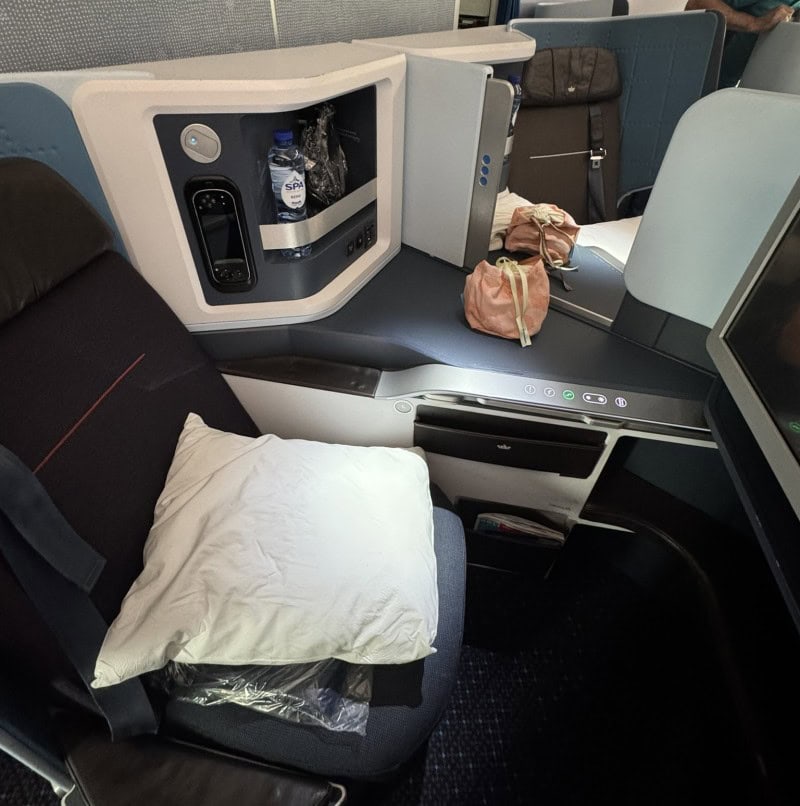
Understanding Intercontinental Business Class
Travelers are surprised when they fly business class between continents for the first time.
Unlike long-haul international business class, most intra-continent business class cabins use standard economy seating with the middle seat blocked.
Benefits typically include:
- Priority boarding
- Priority security access
- Additional baggage allowance
- Lounge access
- More personal space
For shorter flights, these benefits can still provide significant value, especially when traveling with carry-on luggage. This is one reason we believe it helps to Pack Light for Europe, especially when using trains, positioning flights, and shorter intra-Europe segments.
It also helps to understand how airline and hotel programs work together. Our guide to Transfer Partners and Hotel Points for Europe Travel explains how flexible points can support both flights and lodging when planning a larger Europe itinerary.
Why We Start Planning Europe Trips 18 Months Ahead
People often ask why we begin planning so early.
The answer is simple.
The trip itself usually starts long before the flight is booked. We have a long bucket list of trips we want to take, mostly centered around Europe or North American natural wonders.
For us, planning provides time to:
- Earn sign-up bonuses
- Build a points balance
- Monitor award availability
- Coordinate vacation schedules
- Research hotels and destinations
- Compare routing options
Planning ahead also reduces pressure. My wife leaves this to me, and I create options for her to choose from later. An example is planning for 2027; I will start by planning flights to and from Europe to our home airport in Chicago. The details will come later of where to go in the 12 to 14 days we will be in Europe. Flying into European gateway cities allows us to be very flexible in deciding upon a final itinerary.
Instead of trying to force a trip into whatever award inventory remains, you can build the trip you want.
This becomes especially important for anniversary trips, family vacations, Christmas Markets, and other travel experiences tied to specific dates.
Create Loyalty Accounts Before You Need Them
One of the most overlooked steps in award travel is setting up loyalty accounts before you begin searching.
We maintain active accounts with:
- Flying Blue
- Avios
Having accounts established in advance allows us to:
- Search faster
- Transfer points immediately
- Avoid delays
- Act quickly when opportunities appear
The last thing you want is to find the perfect flight and spend valuable time creating accounts while inventory disappears. This is also why choosing the right travel credit card matters. The card you choose should support the trips you actually want to take, not just the largest sign-up bonus available.
Award Search Tools Can Save Hours of Research
One of the biggest changes in award travel over the past few years has been the growth of award search tools.
Before we even begin searching for award space, we often use FlightConnections to understand:
- Which airlines fly a route
- Nonstop versus connecting options
- Seasonal routes
- Alternative gateway airports
Once we have identified potential routes, we frequently use Roame to search multiple loyalty programs simultaneously.
Our typical workflow is:
- Identify gateway cities.
- Use FlightConnections to evaluate routes.
- Search award space using Roame.
- Confirm availability.
- Transfer points.
- Book positioning flights if needed.
These tools are not perfect. However, they can dramatically reduce the amount of manual searching required and help identify opportunities that might otherwise be missed. For travelers comparing search platforms, Thrifty Traveler's guide to award search tools provides a useful overview.
Be Careful About Transferring Points
Transferable points are one of the most powerful tools in travel rewards.
They are also one of the easiest ways to make expensive mistakes.
Once points are transferred from programs such as:
- American Express Membership Rewards
- Chase Ultimate Rewards
- Capital One Miles
they cannot be transferred back.
This creates the risk of stranded points.
For our travel style, we primarily transfer into programs we know we will use again, including Flying Blue and Avios.
We also prefer transferring during bonus promotions whenever possible.
A 25% transfer bonus is common.
For example:
- 40,000 Chase Ultimate Rewards points can become 50,000 Avios.
- 40,000 American Express Membership Rewards points can become 50,000 Flying Blue miles.
These bonuses effectively reduce the number of bank points required and can make Business Class awards significantly more attainable.

Award Prices and Fees Rarely Move Lower
Points prices tend to increase over time.
Airlines frequently adjust award pricing, and loyalty programs now use dynamic pricing models.
Carrier-imposed fees and surcharges can also increase.
Once your award ticket is issued:
- Your points cost is locked in.
- Your taxes and fees are locked in.
- Future devaluations usually do not affect your reservation.
Booking early can serve as protection against future price increases.
It is also worth noting that airlines periodically run promotional award sales that can create exceptional value. Programs such as Flying Blue Promo Rewards, British Airways Avios, and others occasionally offer discounted award pricing on specific routes, cities, or travel periods. These promotions are often limited in duration and may only apply to select city pairs. While it is difficult to build an entire travel strategy around finding these deals, travelers who begin planning early and monitor award pricing regularly are often in the best position to take advantage of them when they appear.
Why We Sometimes Book Hotels Before Flights
Travelers and planners assume the flight is always the hardest part of a trip to secure.
That is not always true.
For destinations such as:
- Banff
- Glacier National Park
- Christmas Markets
- Switzerland
The scarce asset may be the hotel.
Flights can often be adjusted. Hotels in prime locations may sell out completely.
In key situations, we secure lodging before finalizing flights because the hotel represents the more difficult reservation to replace. This was an important part of our thinking in our Banff Family Travel with Points & Free Nights example.
This becomes increasingly important as hotel programs adopt dynamic pricing and desirable properties disappear earlier.
Hotel Awards Often Provide Exceptional Flexibility
One of the biggest advantages of hotel award bookings is flexibility.
Unlike airline awards, hotel award reservations can be canceled with little or no penalty until shortly before arrival.
We frequently secure hotel awards early and continue monitoring:
- Cash rates
- Promotions
- Alternative properties
- Changes in itinerary
Sometimes we keep the original booking.
Other times we discover a better cash rate or decide to spend additional time in another city and simply cancel the reservation.
Planning early does not necessarily lock you into a decision. Often, this allows for increased adaptability.
Monitoring Matters More Than Perfect Timing
Booking early works best when combined with monitoring.
We use airline apps, fare alerts, hotel pricing tools, and award search tools to monitor trips after booking.
Sometimes schedule changes create opportunities to:
- Improve routing
- Reduce connection times
- Switch flights
- Improve overall trip quality
The goal is not perfection.
The goal is to stay informed enough to improve your position when conditions change.
Our Europe Booking Formula
- Secure the transatlantic flight.
- Book the gateway city.
- Transfer points only after confirming award availability.
- Add positioning flights within Europe.
- Monitor schedule changes.
- Continue reviewing hotel and flight pricing.
Simple systems often outperform complicated strategies.

Real-World Example: Why We Book Early
For our recent Europe anniversary trip, we began planning a year in advance.
We secured flights to London, booked hotels in London, Bruges, and Paris using IHG points and free night certificates, and later transferred Chase points to Flying Blue for our Air France Business Class flight home from Paris.
Because we planned early, we secured the dates, routing, and premium cabin experience we wanted rather than taking whatever inventory remained closer to departure.
The trip included:
- London
- Bruges
- Paris
- Business Class flights
- Multiple hotel upgrades
- Strategic use of points and free night certificates
None of those opportunities appeared at the last minute. They were the result of planning ahead and remaining flexible.

When Booking Late Still Works
Last-minute opportunities still exist.
Business Class flights that normally cost 80,000 to 120,000 points can occasionally become available for significantly less close to departure.
However, these opportunities typically favor travelers with:
- Flexible dates
- Flexible destinations
- Flexible routing
For travelers with specific vacation goals, booking early remains the more reliable strategy.
The Best Award Travel Strategy Is the One You'll Actually Use
Certain travelers seek to optimize their experience by pursuing the most efficient redemption options available.
Others prefer certainty.
Neither approach is wrong.
Our goal is not to spend 24 hours traveling with multiple layovers simply to save points. We are not resort or luxury hotel stay people. We want to soak in local history, architecture, culture, and culinary experiences.
As we have gotten older, time, convenience, and reduced travel stress have become increasingly valuable.
The best award travel strategy is not always the cheapest. It is the one that helps you take the trips you want to take. That is why the best travel rewards strategy depends on the traveler.
Verify Award Availability Before Transferring Points
One additional risk to be aware of is what experienced award travelers refer to as "phantom award space."
Occasionally, an award flight may appear available in an airline's search engine but cannot be booked. This issue is most often seen when booking flights through partner airlines.
For example, an award seat may appear available through a partner loyalty program, but the operating airline may not have released that seat to partners or the availability data may not have updated correctly.
This becomes particularly important when transferring points from flexible currencies such as:
- Chase Ultimate Rewards
- American Express Membership Rewards
- Capital One Miles
Because transfers are irreversible, transferring points into a loyalty program for an award that cannot be ticketed can leave you with stranded points.
The experienced traveler will take extra steps before initiating a transfer:
- Verify availability through multiple search tools.
- Check availability directly with the operating airline when possible.
- Confirm the award can be booked before transferring points.
- Consider calling the airline if the itinerary is especially valuable or difficult to replace.
This is one reason we transfer points only after we have identified a specific flight and are ready to complete the booking process.
Final Thoughts
Award travel continues to evolve, but one principle remains constant:
Preparation creates opportunity.
Booking early protects availability, guards against devaluations, preserves flexibility, and creates options.
Whether you are planning a family vacation, a Europe anniversary trip, or a bucket-list adventure, early planning remains one of the most powerful travel strategies available.
Need Help Building an Award Travel Plan?
Finding the right award flight is only one part of planning a successful trip. The best strategy connects your points, credit card choices, preferred travel style, hotels, routing, and timing into one clear plan.
Astute Travel Advisors helps travelers think through award travel before they transfer points or lock in a trip. Whether you are planning Europe, a family vacation, or a bucket-list adventure, early planning can make the difference between taking what is left and building the trip you actually want.